Ion Beam analysis

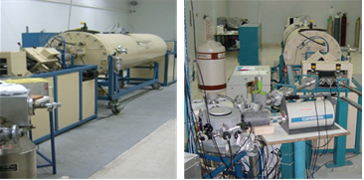
The laboratory is equipped with a NEC-5SDH 1.7 MV tandem pelletron accelerator. The analytical capabilities available on the facility include particle-induced X-ray emission PIXE, proton-induced gamma-ray emission PIGE, Rutherford backscattering spectrometry RBS and elastic recoil detection analysis ERDA. The main strength of IBA is to be multi-elemental, fast, non destructive and could be performed simultaneously. Hence, they could determine the elemental composition of different kind of samples, covering nearly the whole periodic table, with sensitivity for some elements down to ppm level (part per million). Furthermore, they can measure the stoichiometry and thickness of thin films, or multilayer, elaborated on bulk materials with a possibility to perform elemental depth profile; art and archeology, environment, materials science, pharmaceutical science and bio-medicine.

IBA are considered as nuclear analytical techniques and they are used in different applied research. IBA techniques are often used in the below fields of applications where some case studies are shown:

Art and Archeology

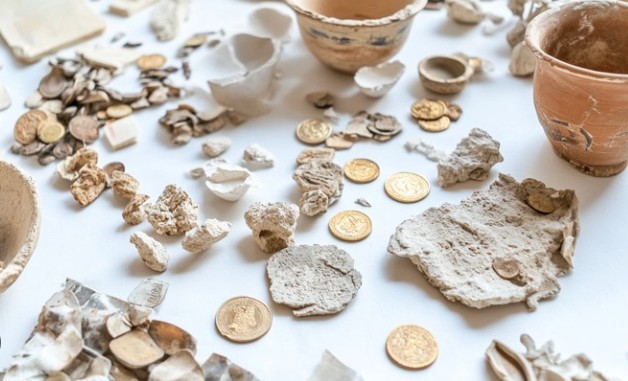
To determine the provenance and authenticity of objects in art and archeology such as ceramics, coins, statuette, painting
Materials Science

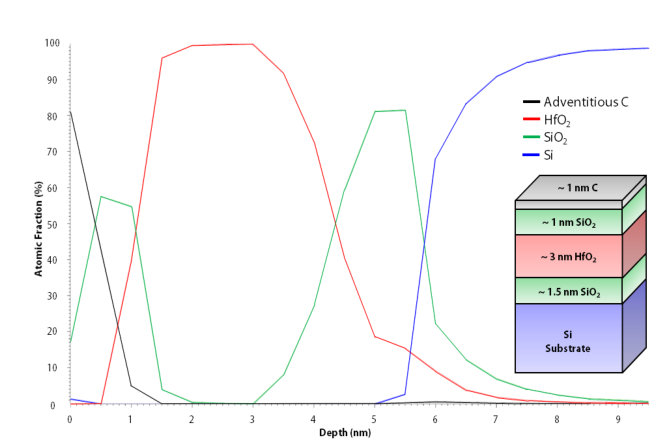
Determination of elemental depth profiles, thickness and stoichiometry of thin-layers or multi-layers. Then, based on IBA results, the physical, electrical or optical properties will be correlated with experimental parameters of the process of synthesis of materials such as semiconductors, alloys, detectors, solar cells, nano-particles.
Pharmaceutical Sciences

Quantification of heteroatom containing active ingredients in commercial solid drugs.
Environment

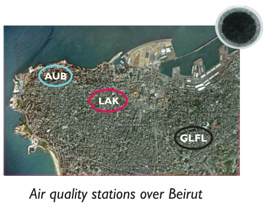
Determination of toxic, pollutant, harmful or nutrient elements in samples such as food, aerosol, soil, sediment, paint.
Other Technical Support