Narcotic Drugs and Explosives
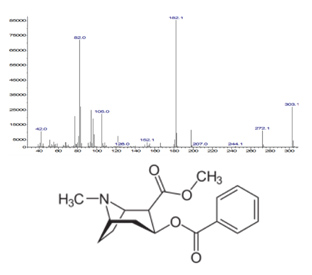
The laboratory, in collaboration with Internal security forces, Lebanese army and customs, provides scientific evidences relating to drugs and explosives analysis in chemical and biological samples such as cosmetics, powders, fluids and soil using gas and liquid chromatography coupled with mass spectrometry, based on their retention time matching and their spectral finger printing as legal defensible data.
Pesticide Residues Analysis
The laboratory employs a standard multi-residues methods for the determination and quantification of more than 120 pesticides residues from different chemical groups (Organochlorine, Organophosphorus, Organonitrogens, Carbamates, Pyrethroids) in fruits, vegetables, cereals and water by using GC-MS and LC-MS/MS. The pesticide residue values results are interpreted according to CODEX and EU international standards: ( 700 samples per year. An efficient QA/QC system is applied to demonstrate the accuracy, reliability and the robustness of the analytical results through internal quality control procedures and proficiency testing schemes, with highly satisfactory results. All this, will contribute to the analytical compliance of the laboratory to ISO 17025.

Polycyclic Aromatic & Aliphatic Hydrocarbons Analysis
The laboratory offers services in the analyses of (PAHs) and aliphatic hydrocarbons in water. A new fast and reliable in-house method using solid-phase extraction technique followed by gas chromatography - mass spectrometry (GC–MS) analysis was developed, validated and published recently. Sixteen PAHs classified by the US Environmental Protection Agency (EPA) as priority hazardous substances and twenty four aliphatic hydrocarbons with carbon chain lengths ranging from n-C10 to n-C33 are analyzed in the laboratory with very low detection limit (parts per billion) using high sensitive and robust analytical equipment.

Food Irradiation
Food irradiation is a technology for controlling spoilage and eliminating food-borne pathogens, such as salmonella. Research on irradiated food has been initiated at the laboratory since the beginning of 2011 using Cobalt-60 gamma irradiators. The purpose of this area is to study the effect of ionizing radiation on food products particularly those of economic importance to Lebanon in order to improve the microbiological quality and increase food safety.and to reduce the economic loss resulting from food deterioration.
Occurrence and Molecular Biology of Mycotoxins
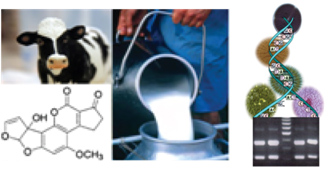
Mycotoxins are toxic fungal metabolites that contaminate various agricultural products, either pre- or post- harvest. They threaten the safety of food and can cause serious health effects in humans. Early detection and control of mycotoxin producing species is crucial to prevent its entering into the food chain and it is a useful tool in disease management practices. The laboratory is interested in mycotoxin research especially ochratoxin A, aflatoxins/ sterigmatocystins, patulin and zearalenone. Research activities include:
i) Determination of mycotoxins in different food commoditie like dairy products, apple, cereals, etc..
ii) Microbial decontamination of mycotoxins and
iii) Development of molecular methods for differentiation and detection of mycotoxigenic fungi
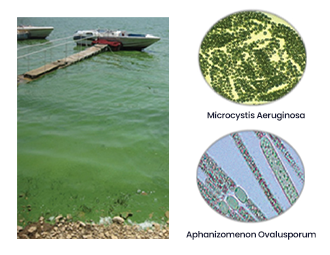
Study of Cyanobacteria and their Toxins in Lebanon Hydrosystems
Toxic blooms of cyanobacteria (blue green algae) have become a frequent phenomenon in eutrophic lakes and reservoirs throughout the world due to the public health risks, negative impacts on ecological and economical aspects. Since 2009, toxic blooms of Microcystis aeruginosa and Aphanizomenon ovalusporum have been detected for the first time in Lake Karaoun. The laboratory of Microorganisms and Food Irradiation carry out research work intended to management strategy for managing cyanobacteria and the overall lake quality. Current works in the laboratory include:
Ecophysiological study of cyanobacteria: factors affecting their proliferation and toxins production
Development of monitoring program of the toxic cyanobacterial blooms by in situ physico-chemical parameters measurements
Establishment of an operational mathematical modeling of the dynamics of phytoplankton activityLebanon in order to improve the microbiological quality and increase food safety.and to reduce the economic loss resulting from food deterioration.